Never Meet Your Heroes: The Science of Dreams, Talent and the Smallest Differences That Decide Everything
There is an old saying: never meet your heroes. It sounds cynical, suggesting that the person you admire may disappoint you when they step out from the shadows of your imagination.
But science tells us there is another, far more interesting reason. You should never meet your heroes because for one brief moment, you may discover that they are not mythical beings. They are human. They trained, struggled, sacrificed and doubted. They walked roads that look remarkably similar to your own. And then comes that niggling thought: “One tiny difference and that could have been me.”
At the recent PCMG conference, I had the privilege of inviting Olympic runner Roger Black to deliver the keynote presentation. A hero of British athletics (and me), Roger did exactly what great performers do: he made excellence look achievable. His motivational speech was exceptional, warmly received by everyone in the room, and demonstrated the same qualities that made him such a formidable competitor — clarity, humility, resilience and belief. He is big into belief. It made me proud to have been able to invite him along – and thanks to Veramed for sponsoring.
The fascinating thing was not the distance between us. It was the similarity (in my head at least).
Here was someone whose journey seemed to run alongside my own in many ways: early ambition, years of commitment, the relentless pursuit of improvement and the belief that tomorrow’s performance could be better than today’s. Yet our destinations were different. We shared some steps on the path, arriving at different summits.
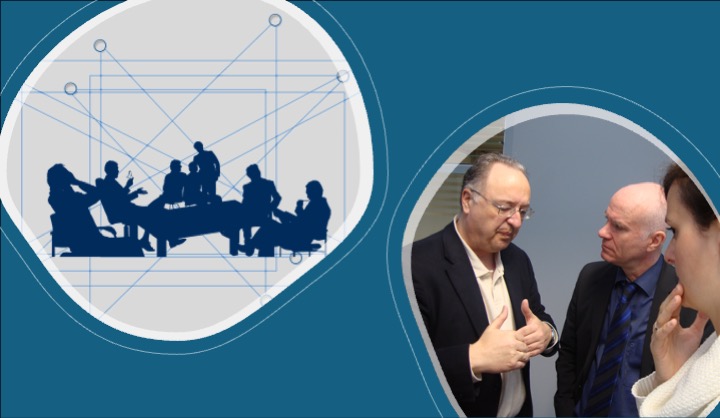
Perhaps the most obvious difference was a simple physiological one: height (see the photo).
Roger stands at approximately 6 foot 3 inches. I stand at 5 foot 8 inches. In everyday life, five inches is barely worth mentioning. In elite sprinting, it can represent a significant biological difference: particularly 400 metre running. Sprint performance depends on a complex interaction of stride length, stride frequency, power production, tendon mechanics, muscle fibre characteristics and metabolic efficiency [1][2]. Taller athletes possess biomechanical advantages in areas such as stride length, although the relationship between body dimensions and performance is highly specific to the event and individual [2]. In my case, I expect I had to take three strides for very two of Roger’s.
This is the uncomfortable beauty of sport science: effort matters enormously, but biology sets boundaries. The human body is an extraordinary machine, but it is not infinitely adjustable (as we saw at the recent Enhanced Games). Training can transform capability, improve neuromuscular coordination and optimise performance, but it cannot rewrite every anatomical parameter. The best athletes are not simply the hardest workers; they are the result of an interaction between genetics, environment, opportunity and commitment to practice [3].
Roger has often described himself as a natural athlete. I describe my own journey differently. For me, it was about relentless training from the age of 11: repeating skills, building fitness, learning discipline and returning day after day when improvement seemed invisible. You also have to handle getting knocked back because there is always someone faster (and taller).
Interestingly, science suggests both stories can be true.
Modern expertise research has moved beyond the simplistic argument of ‘talent versus training’. Exceptional performance emerges from the interaction between innate characteristics and years of structured, purposeful improvement [3][4]. The athlete who appears effortless from the outside may have developed thousands of hidden adaptations beneath the surface.
The public sees the race. It rarely sees the repetitions.
Athletics offers one of the fairest equations in human endeavour: you only get out what you put in.
Outcomes don’t always come from you expect. Winning doesn’t always end with a medal, a record or recognition. But the sport gives something back. It rewards commitment with growth. It converts effort into capability. It teaches that excellence is not a single moment but the accumulated result of thousands of small decisions.
Roger and I perhaps reached different destinations, but we experienced the same reward: our greatest day.
That is the magic of athletics. It does not promise that everyone will become an Olympic champion. Physiology, opportunity and circumstance ensure that outcomes will differ. But it does promise that dedication will reveal what you are capable of becoming.
Meeting your heroes can therefore be dangerous, not because they fail to live up to expectations, but because they remind you that greatness is closer to ordinary human experience than we imagine.
For one minute, you see the person behind the achievement.
And you wonder: how much difference was there really between us?
Sometimes the answer is five inches.
Sometimes it is a lifetime of tiny choices and that is what makes the journey worth taking.
References
- Weyand PG, Sternlight DB, Bellizzi MJ, Wright S. Faster top running speeds are achieved with greater ground forces not more rapid leg movements. Journal of Applied Physiology. 2000;89(5):1991-1999.
- Hunter JP, Marshall RN, McNair PJ. Interaction of step length and step rate during sprint running. Medicine & Science in Sports & Exercise. 2004;36(2):261-271.
- Ericsson KA, Krampe RT, Tesch-Römer C. The role of deliberate practice in the acquisition of expert performance. Psychological Review. 1993;100(3):363-406.
- Macnamara BN, Hambrick DZ, Oswald FL. Deliberate practice and performance in music, games, sports, professions, and education: a meta-analysis. Psychological Science. 2014;25(8):1608-1618.
- Joyner MJ, Coyle EF. Endurance exercise performance: the physiology of champions. The Journal of Physiology. 2008;586(1):35-44.